Epoxy resin or polyester resin
Differences – pros and cons – application
Epoxy resin
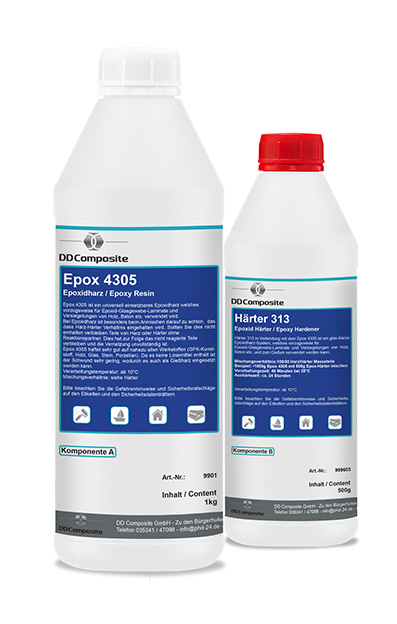
+ Better mechanical properties
+ Very good chemical resistance
+ Excellent adhesive properties on various substrates (wood, metal)
+ Very good fiber adhesion
+ Low odor (contains no solvents), suitable for indoor use
+ Hardly any shrinkage during processing, therefore very well suited for molded components
+ Very good impregnation properties for glass filament fabric, aramid fabric, and carbon fabric
+ Prevents osmosis damage (boat building and renovation)
- The hardener must be added very precisely when mixing
- More expensive than polyester resin
Application
Epoxy resin is a versatile adhesive that is used, for example, in boat building, in the home, and in model making. In combination with glass fiber, carbon fiber, and aramid fiber, it is used as a fiber-reinforced plastic in the construction of modern gliders, but also increasingly in large passenger aircraft. It is also used in the production of stone carpets, as a casting resin for the manufacture of components in the casting process, for industrial floors, concrete coatings, and concrete repairs. The manufacture of fiber-reinforced components, including for aerospace, motorsports, and yacht building, often using the hand lay-up process, is another area of application. Epoxy resin is also used as corrosion protection (steel structures), in the renovation of pipes (e.g., drinking water pipes, underfloor heating) and in the sealing of terrariums; once cured, it is non-toxic. It is also used for casting electrical components for insulation and corrosion protection, as well as a substrate material for electronic circuits. It is also used in art and plastination.
Polyester resin
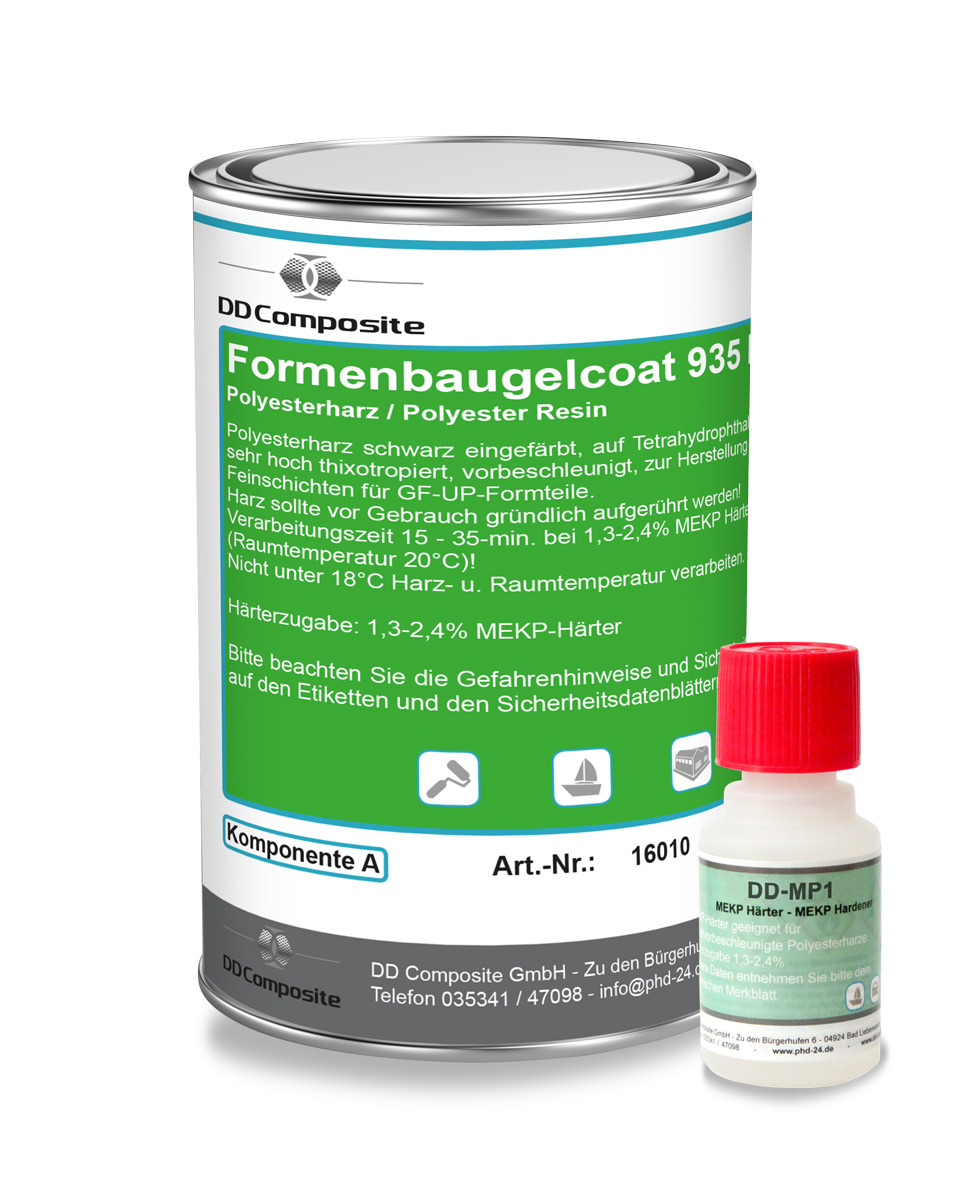
+ Easier to process
+ Hardener addition between 1.0 and 2.5%, reaction time can be controlled (see data sheets)
+ More affordable price
- Strong odor during curing (contains styrene)
- Lower mechanical properties
- Lower adhesive properties on solid substrates
Application of polyester resin
Polyester resin is used in the manufacture of tanks, boats, car bodies, and industrial components. It is used in the construction of pools and ponds and for waterproofing buildings.
Instructions in PDF format for downloading or printing can be found here: Epoxy resin or polyester resin
In addition, you can quickly and easily find answers to frequently asked questions here. Frequently asked questions
The information contained in this manual is based on careful research. It is provided for informational purposes only and does not exempt the user from conducting their own tests for the intended purposes and from checking for any infringement of third-party property rights. The information is non-binding and does not constitute a guarantee of properties within the meaning of any laws. No liability is accepted for the accuracy and completeness of the information.