What do I need to bear in mind when working with polyester resin?
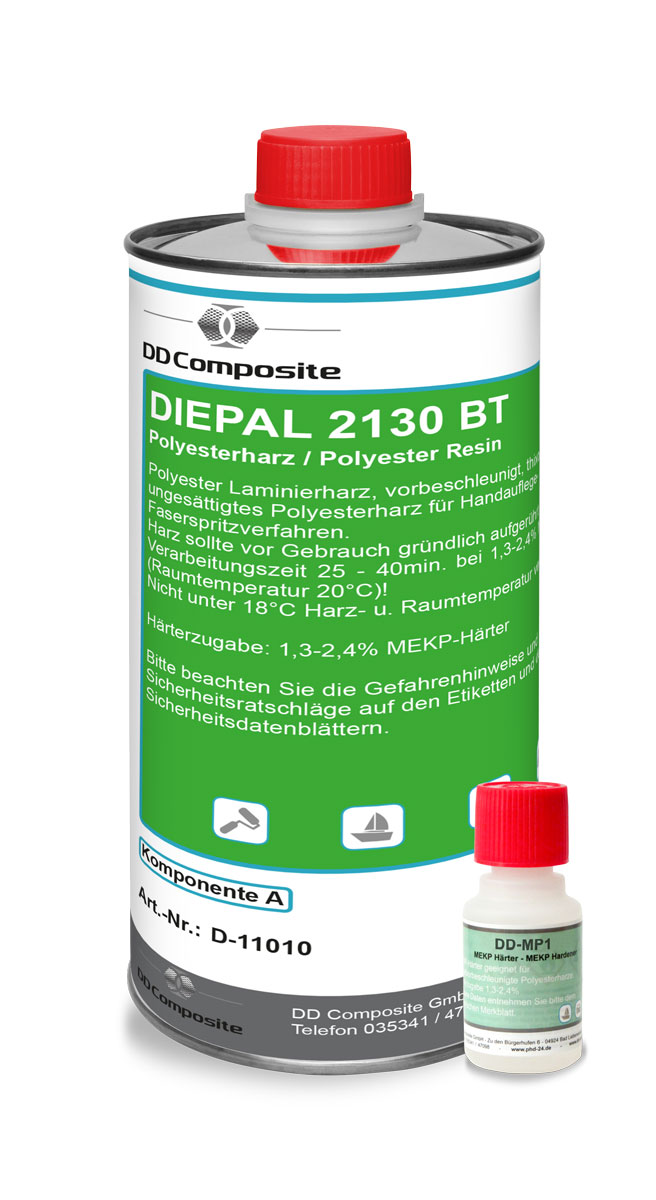
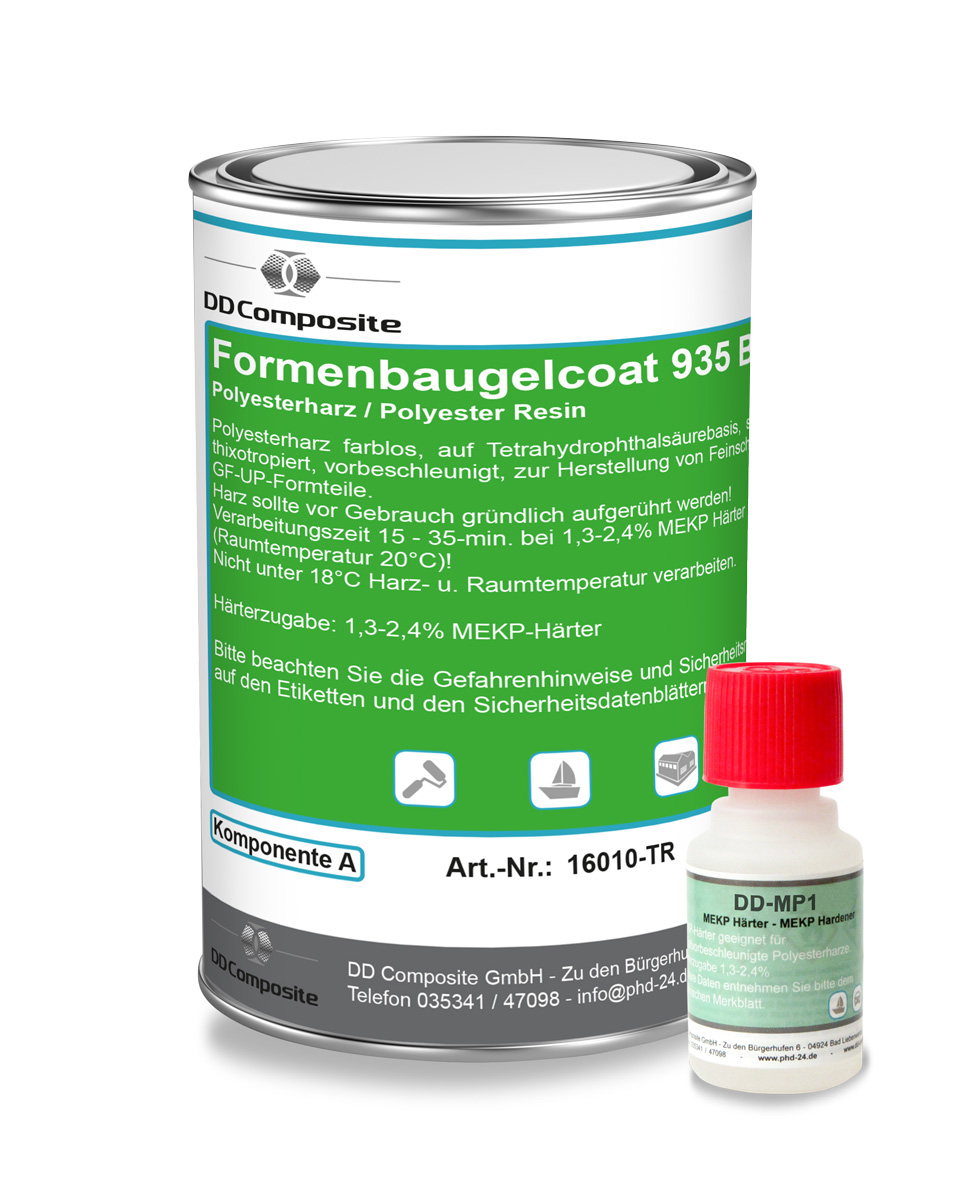
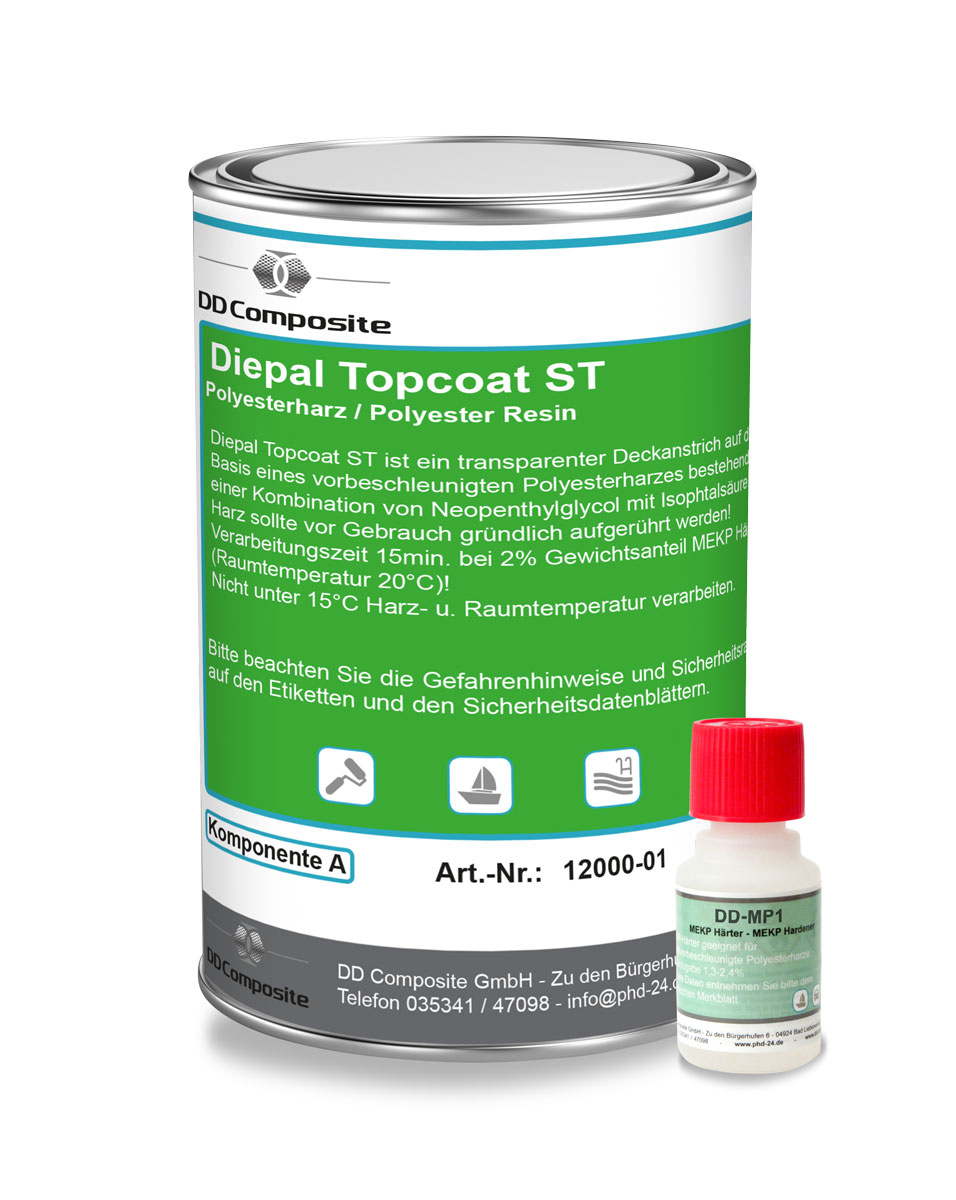
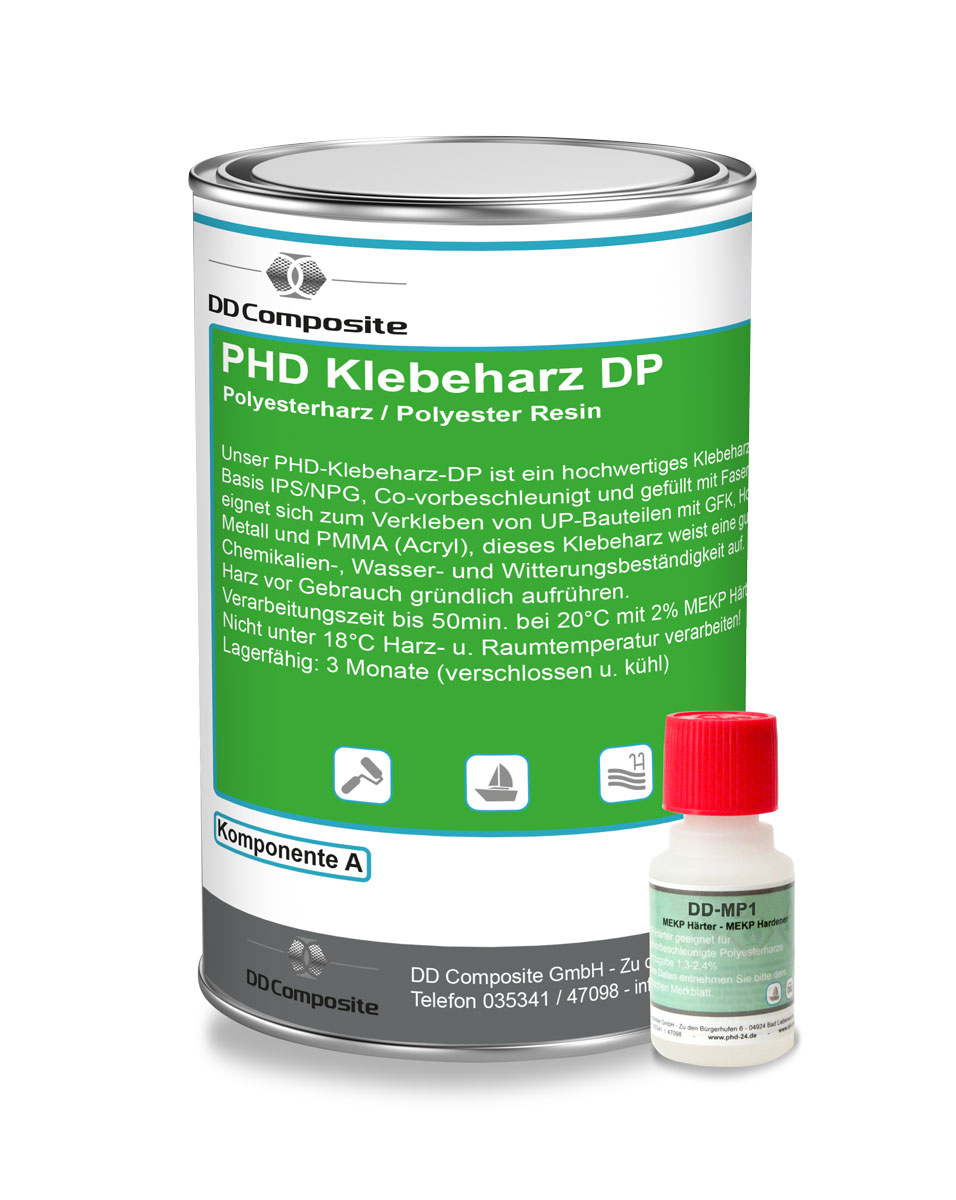
In the following lines, we would like to give you a few tips and hints on the processing and handling of polyester resins. Our range includes unsaturated polyester resins (UP) for the manufacture of coatings, molded parts, vehicle parts, model pond and pool construction, and other components.
Please note!
Polyester resins are subject to shipping restrictions. You can find more detailed information on the product. Polyester resins should not be exposed to direct sunlight during processing and curing, as UV radiation has a negative effect on the properties of the curing resin!
Preparation
The substrate must be dry, clean, and free of grease! We therefore recommend sanding the surface and degreasing it with acetone. If the surface to be treated is contaminated with silicone, it should be treated/cleaned with a silicone remover. Please note: always allow parts treated with acetone to air dry thoroughly for several hours.
Processing
The processing temperature should be between 15-25°C, not below 15°C, as lower temperatures will result in a loss of properties and suboptimal curing. The relative humidity should not exceed 70%. The resins can be tempered to improve their water and chemical resistance properties. (For information on tempering, please refer to the respective data sheet). The hardener addition should be 1-3%, depending on the layer structure and resin type. Please refer to the respective data sheet. (High temperature - less hardener; thin layer - more hardener). Before use, all components should be thoroughly stirred (homogenized) to achieve proper curing. When processing smaller quantities of resin, you should measure the hardener with our dosing syringe; larger quantities can be weighed. For larger batches (2 kg or more), our Uni-stirring rod with a drill should be used for mixing. The bottom and edges should be scraped off and stirred in thoroughly. To prevent the resin from hardening too quickly, the mixed resin hardener should be poured into a flat container, such as a paint tray. The large surface area and flat storage prevent the resin from heating up too quickly.
Fillers
We recommend stirring fillers into the mixed resin-hardener mixture.
Color pastes should also be added to the resin in advance.
Retarders (inhibitors)
By adding our inhibitor, you can extend the processing time. This is particularly recommended at high temperatures and when coating large areas. Adding 0.2% doubles the processing time, and adding 0.5% quadruples it (approx.). Adding more than 0.5% and in fine-layer resins such as gelcoat is not recommended.
Recommendations
We recommend that you carry out tests in advance to determine suitability for your project. Applying multiple layers? If you want to apply multiple layers of fiberglass, you can skip sanding between layers as long as the previous layer has not yet hardened! Please note that polyester resins contain solvents and can therefore only be processed with solvent-resistant tools. Mixing cups should be made of PP or PE.
Storage
Seal opened containers tightly with the original lid. Store in a cool, dry place. Can be stored for at least 6 months under optimal conditions.
Cleaning of work equipment
Cured resins can only be cleaned mechanically, for example by sanding! Acetone can be used to remove uncured resin residues from tools, which must then be allowed to air sufficiently to prevent the cleaner from entering new containers!
Precautions - Occupational safety
Occupational safety is important; gloves and safety goggles should always be worn. We also recommend wearing protective clothing. Due to the styrene emissions from polyester resins, processing should only take place in well-ventilated rooms. When processing resins, the information in the safety data sheets must be observed!
Instructions in PDF format for downloading or printing can be found here: Working with polyester resin
If you have any questions about our products or our service in general, please do not hesitate to contact us. We are available by phone, email, or via our convenient online form.